IRSI Register your interest
Register your interest
The Summit journey

Call for abstracts

Abstracts

Abstract submission opens Autumn 2026. Read the guidelines, choose your track and theme, and send your abstract from this page.

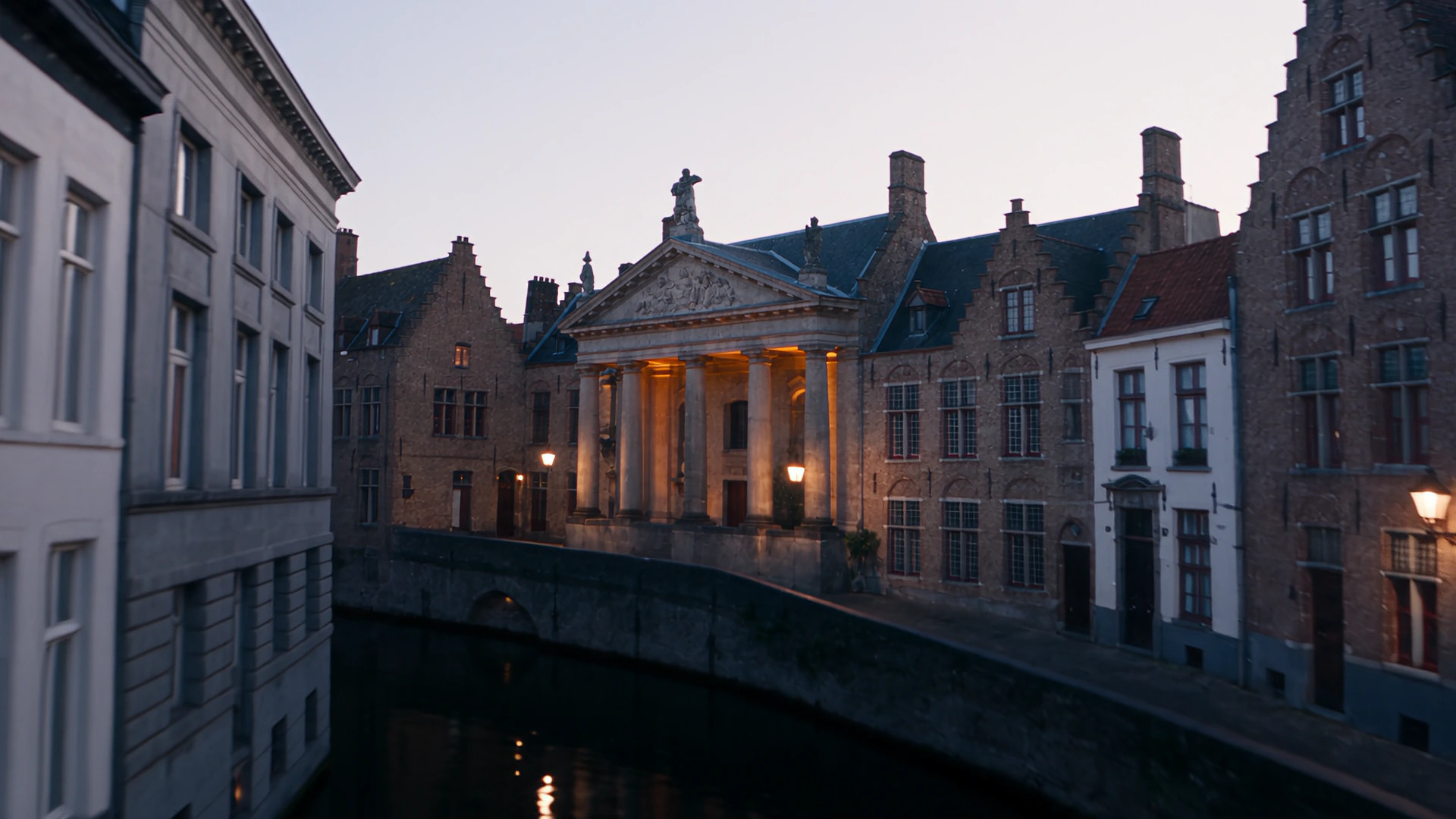
Still from the Summit journey

Submit your abstract

The Scientific Committee of the International Rehabilitation Summit invites researchers, clinicians, rehabilitation professionals, persons with lived experience, policymakers, innovators, and other stakeholders to submit their work.

Abstracts may address scientific research, clinical practice, technological innovation, lived experience, rehabilitation policy, or new models of care.

Only abstracts that comply with the submission guidelines will be considered.

Good reasons to submit your abstract:

  • Present your work to an international and multidisciplinary rehabilitation community.
  • Connect with researchers, clinicians, policymakers, innovators, and persons with lived experience.
  • Receive valuable feedback on your work.
  • Develop new collaborations across disciplines, organisations, and countries.
  • Contribute to translating knowledge and innovation into better rehabilitation outcomes.
  • Help shape the future of rehabilitation.

The abstract body is limited to a maximum of 300 words, excluding title and author information. All abstracts and presentations must be in English.

About you

Your abstract

About the six tracks

About the four themes

If your topic is not listed, please select Other within the most appropriate main theme.

0 / 300 wordsPlain text. Figures and tables are not permitted.

Write “none” if there are none.

Read the submission guidelines

We’ll use what you send to reply to you. Our privacy notice explains how we handle it and how to ask us to delete it.

Read the guidelines first

Submission guidelines

Before completing the online submission form, please review the following guidelines carefully. Only abstracts that comply with the guidelines will be accepted.

  1. Abstracts must be submitted through the online submission platform.
  2. All abstracts and presentations must be in English.
  3. The abstract body is limited to a maximum of 300 words, excluding title and author information.
  4. Figures and tables are not permitted.
  5. Authors should structure their abstract according to their selected submission track (see Submission tracks).
  6. All co-authors must have reviewed and approved the submitted abstract.
  7. The work must comply with applicable ethical standards and regulations. Relevant ethical approval must be obtained for research involving human participants or animals.
  8. Funding sources and potential conflicts of interest must be disclosed.
  9. Abstracts must be objective, evidence-based, and non-promotional. Submissions written to promote a company, service, or product will not be accepted through the scientific abstract procedure.
  10. Submitting authors may indicate their preferred presentation format. The final decision rests with the Scientific Committee and its Reviewing Panel.
  11. The presenting author must register for and attend the Summit if the abstract is accepted.
  12. Abstracts may be edited through the submission platform until the submission deadline.
  13. For Focused Symposia and Instructional Workshops, contributions may involve multiple (co-)authors; however, only one author may be selected as presenter for correspondence during submission. For all other tracks, there can be only one presenting author.

Main themes

Authors should select one main theme and the most appropriate subtheme.

Technology, Data & Innovation

  • AI & Machine Learning in Rehabilitation
  • Technology & Digital Health in Rehabilitation
  • Personalised & Precision Rehabilitation
  • Outcome Measurement & Data
  • Mobility & Assistive Technology
  • Communication & Accessibility Technology, including AAC
  • Other

Clinical Specialties

  • Neurorehabilitation & Neuromuscular Rehabilitation
  • Pain Management & Rehabilitation
  • Seating, Mobility & Pressure Care in Rehabilitation
  • Nutrition in Rehabilitation
  • Other

Population-Specific Rehabilitation

  • Paediatric Rehabilitation
  • Adult and Ageing Populations
  • Autism & Neurodevelopmental Conditions
  • Rare Diseases
  • Complex and Lifelong Conditions
  • Other

Systems, Policy & Care Models

  • Functional Activities and Participation Focused Care (ICF F-words)
  • Prevention & Community-Based Rehabilitation
  • Multidisciplinary & Integrated Care
  • Rehabilitation Pathways and Service Delivery
  • Implementation Science & Knowledge Translation
  • Rehabilitation Workforce & Education
  • Health Economics & Value-Based Rehabilitation
  • Advocacy & Rehabilitation Policy
  • Other

Other and Cross-Cutting Themes

Relevant submissions from across the full field of rehabilitation are welcome. Cross-cutting topics may include participation and quality of life, health equity, accessibility, ethics, sustainability, education, global rehabilitation, and stakeholder engagement.

If your topic is not listed, please select Other within the most appropriate main theme.

Submission tracks

Six tracks. Choose one in the form, and structure your abstract with that track’s own headings.

Focused Symposia

Focused Symposia provide an integrated, state-of-the-art overview of evidence, innovation, or practice relating to a relevant rehabilitation topic. A Focused Symposium should include at least three contributors representing complementary disciplines, stakeholder groups, or perspectives, in a 60 minute session including 15 minutes for audience discussion. Proposals involving persons with lived experience (PWLE) or family members are particularly encouraged and will be prioritised.

Structure your proposal using the following headings:Objectives · Summary · Proposed speakers and perspectives · Outline of the symposium · Expected outcomes

Oral Communications

Oral Communications present original research, clinical innovation, implementation experience, or policy developments.

Structure your abstract using the following headings:Background · Aim · Methods or approach · Results or outcomes · Conclusions

Scientific Posters

Scientific Posters provide a visual presentation of research findings, clinical projects, implementation initiatives, or new models of care. Use the same abstract structure as for an Oral Communication.

Technology & Innovation Posters

Technology & Innovation Posters present new rehabilitation technologies, digital solutions, assistive technologies, prototypes, or innovation projects. Submissions must describe the rehabilitation need being addressed, the proposed solution, available evidence or evaluation, and its potential relevance for users and practice. Commercially promotional submissions will not be accepted through the scientific abstract procedure.

Lived Experience Sessions

Lived Experience Sessions provide a platform for persons with lived experience, families, and representative organisations to share experiences, insights, and priorities for the future of rehabilitation.

Structure your contribution using the following headings:Context or perspective · Key message · Lessons learned · Relevance for rehabilitation

A conventional scientific research structure is not required.

Instructional Workshops

Instructional Workshops provide practical, evidence-informed learning relating to rehabilitation research, clinical practice, technology, policy, or implementation.

Structure your proposal using the following headings:Learning objectives · Target audience · Workshop content · Educational format · Expected learning outcomes

Other Summit Programme strands

The Summit programme also includes the following strands, which are an integral part of the Summit but are populated through different routes rather than the open scientific abstract call above:

  • Industry Programme: Industry Symposia, Product & Technology Showcases, Tech Talks. (Typically arranged through sponsorship/partnership agreements rather than open abstract submission.)
  • AI & Innovation Programme: Hackathon, showcases, start-ups, demonstrations, and AI-specific sessions (AI in Rehabilitation Symposia, AI Innovation Showcases). (May combine curated invitations with a dedicated open call, to be confirmed.)
  • Pre-Summit Programme: Pre-Courses, Pre-Symposia, AI Technology Hackathon, PWLE Pre-Summit Day. (Separate registration/application process, ahead of the main Summit.)

Exact involvement routes for these strands, invitation, sponsorship, or a dedicated call, are still to be defined and will be communicated separately from the Scientific Programme abstract procedure above.

Deadlines

Provisional timeline

  • Abstracts openAutumn 2026
  • Registration opensNovember 2026
  • Early bird closesMarch 2027
  • The Summit26–31 October 2027

Call for abstracts opens

Focused SymposiaOctober 2026
Oral Communications, Posters, Instructional WorkshopsNovember 2026

Abstract submission deadline

Focused SymposiaNovember 2026, 23:59 CEST
Oral Communications, Posters, Instructional WorkshopsJanuary 2027

A two-week extension may apply.

Notification of acceptance

Focused SymposiaDecember 2026
Oral Communications, Posters, Instructional WorkshopsFebruary 2027

Presenter registration deadline

All accepted presentersFebruary 2027
Keynote speaker announcementsfirst names September 2026, final names February 2027
Call for Bursary Applicantsopens December 2026, deadline January 2027, communication of acceptance February 2027
Registration tool opensNovember 2026
Early bird registration deadlineMarch 2027
Regular fee deadlineApril 2027

Conference dates

The International Rehabilitation Summit26–31 October 2027, Bruges

What’s confirmed?

Updated 7 September 2026

This list changes only when the founding team confirms something. If you need an answer before it is published, write to us.